

Uganda Power Blackouts : Is UEDCL Underfunded or is the Electricity Network Failing?
By; Ibrahim Kigozi G|
Ugandans are increasingly struggling with persistent electricity blackouts, raising serious questions about the country’s power distribution system and the ability of the Uganda Electricity Distribution Company Limited (UEDCL) to deliver reliable electricity to consumers.
From Kampala’s busy commercial centres to residential neighbourhoods and industrial areas, frequent power interruptions have become a growing concern. Businesses are losing productive hours, manufacturers are struggling to maintain operations, households are inconvenienced, and entrepreneurs who depend on electricity are counting the cost.
But what exactly is going wrong? Is UEDCL underfunded, is Uganda generating insufficient electricity, or has the country’s distribution infrastructure failed to keep pace with growing demand?
The problem appears to involve several factors.

An ageing network under pressure
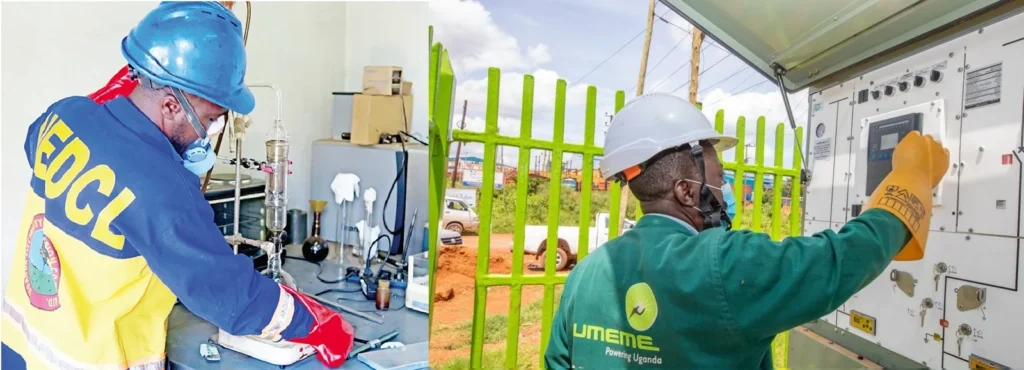
One of the major challenges facing UEDCL is the condition of the electricity distribution infrastructure inherited during the transition from Umeme to government management on April 1, 2025.
UEDCL says it currently serves approximately 2.8 million customers, compared with 1.64 million in 2021. This represents significant growth in electricity connections, putting additional pressure on transformers, substations and distribution lines.
In Greater Kampala, electricity demand has reportedly increased by approximately 60 per cent over the past five years.
In some areas, infrastructure designed to serve smaller communities is now supporting rapidly expanding residential and commercial developments.
This creates a situation where electricity demand exceeds the capacity of existing equipment, resulting in breakdowns, system overloads and planned interruptions.
Is UEDCL underfunded?
Funding and investment are increasingly becoming central to the debate.
UEDCL’s acting Managing Director, Eng. Joselynne Rwabwogo, recently disclosed that the company requires approximately US$994 million under its five-year investment plan to expand access, modernise infrastructure and improve electricity reliability.
The company has identified approximately US$107 million for priority projects through December 2027.
These figures suggest that substantial investment is needed to address the country’s electricity distribution challenges.
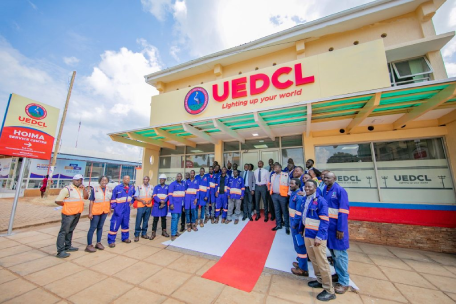
The problem is not necessarily that UEDCL has no money, but whether available resources, investment approvals and procurement processes are sufficient to deliver improvements at the required speed.
The challenge of obtaining transformers has also affected operations. Government has now moved to allow the importation of up to 1,000 transformers after local supply arrangements under the Buy Uganda Build Uganda policy failed to meet the sector’s demand.
Generation is not the only problem
Uganda has invested heavily in electricity generation, particularly through hydroelectric projects. However, having electricity generated at power stations does not automatically guarantee reliable supply to consumers.
Electricity must pass through transmission infrastructure before reaching distribution networks and individual customers.
A weakness at any stage can interrupt supply.
Indeed, Uganda’s State Minister for Energy, Sidronius Okaasai, recently told Parliament that existing electricity lines were struggling to handle demand and that some conductors required upgrading.
The cost to ordinary Ugandans
Frequent blackouts have consequences beyond darkness in homes.
Small businesses lose customers, restaurants risk losing refrigerated products, factories experience production interruptions, and communication services can be affected.
Power fluctuations can also damage electrical equipment, increasing operating costs for businesses already facing economic pressures.
What should happen next?
Ugandans need more than apologies and explanations. They need a clear investment timetable, transparent procurement, regular maintenance, improved customer communication and accountability for service delivery.
UEDCL must also publish clear information about affected areas, planned maintenance schedules and expected restoration times.
Ultimately, Uganda’s electricity challenge is not simply about generating more power. It is about ensuring that the electricity already generated can reach consumers consistently and affordably.
The question now is whether the government and UEDCL can turn their investment commitments into visible improvements before unreliable electricity becomes an even greater obstacle to Uganda’s economic growth.