
OPINION: SCRAPPING BODA BODA STAGE CHARGES IS GOOD, BUT IS IT ENOUGH TO RESCUE RIDERS FROM POVERTY?
By Octavius Tunanukye
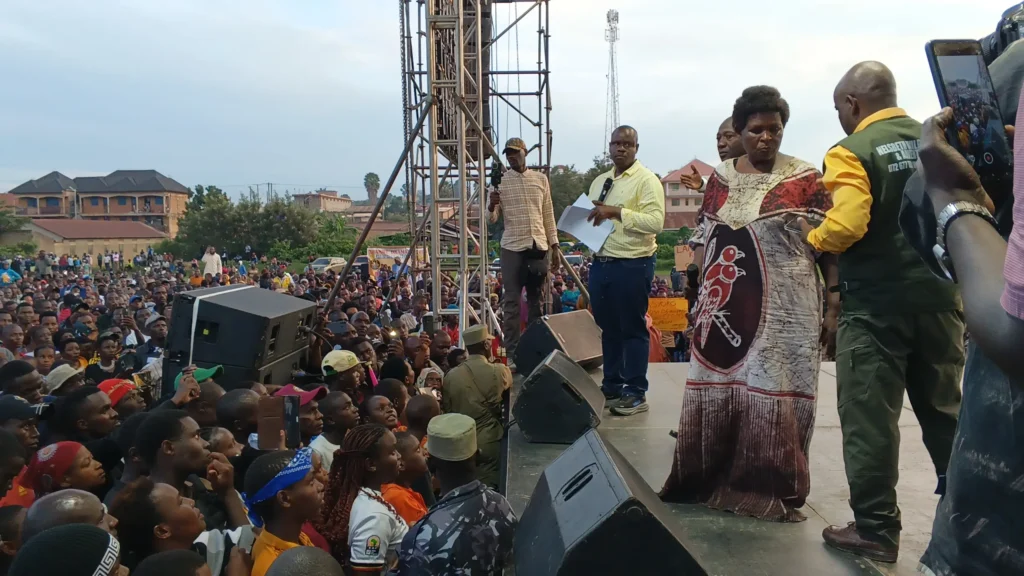
The Minister for Local Government, Hon. Balaam Barugahara, on November 7, 2026, announced the immediate scrapping of boda boda stage charges across Uganda, during his anti-corruption inspection tour at Kabwohe Main Stadium in Sheema District.
The Minister attributed the directive to President Yoweri Kaguta Museveni’s commitment to protecting boda boda operators from unnecessary financial burdens, while calling upon motorcycle owners and riders to organise themselves into Savings and Credit Cooperative Organisations (SACCOs) to benefit from government financing programmes.
He further revealed that President Museveni had pledged to support boda boda operators in building savings and transforming their largely informal transport business into a platform for wealth creation.
The proposal is particularly significant for an industry that provides livelihoods to millions of Ugandans. However, while eliminating stage charges is a welcome intervention, one cannot ignore a more fundamental question: Is this really the most effective way of rescuing boda boda operators from poverty?
In my view, government needs to look beyond stage collections and SACCO financing and confront one of the biggest pressures on the daily earnings of motorcycle taxi operators: the cost of fuel.
FUEL PRICES: THE REAL DAILY ECONOMIC PRESSURE
A boda boda rider does not earn money simply because he owns a motorcycle. His income depends on the number of passengers he transports, the distance covered and, importantly, how much he spends to keep the motorcycle running.
Every increase in petrol prices directly affects his operating expenses. Before considering personal savings, school fees, rent, food and other household responsibilities, a rider must first account for fuel, motorcycle maintenance and other daily costs.
Scrapping stage charges may leave riders with some additional money, but what happens when a substantial proportion of their daily earnings continues going towards purchasing fuel?
The government should therefore consider practical measures to ease fuel-related costs, encourage fair competition in the petroleum market and explore sustainable interventions that reduce the operating expenses of commercial motorcycle transport.
After all, helping someone retain more of their daily earnings can be just as important as helping them access a loan.
SACCOs ARE IMPORTANT, BUT CREDIT ALONE IS NOT WEALTH
President Museveni’s UGX 10.2 billion boda boda financing initiative, launched in September 2025, targeting 102 SACCOs in Kampala, Wakiso and Mukono, offers an alternative to expensive private borrowing.
Under the programme, each recognised SACCO received UGX 100 million as a revolving fund, with members expected to access motorcycle financing at an annual interest rate capped at six per cent.
This is a meaningful attempt to organise informal-sector workers and improve their access to affordable credit.
However, we must recognise that access to credit is not necessarily the same as escaping poverty.
A rider who acquires a motorcycle through a SACCO still has to purchase fuel, maintain the motorcycle, meet loan repayments and provide for his family. Without sufficient disposable income, even affordable credit can become another financial responsibility.
Furthermore, SACCO leadership must demonstrate transparency, accountability and responsible management to ensure that government funds genuinely benefit the intended members.
WHY RIDERS TURN TO PRIVATE MONEY LENDERS
The dependence on private moneylenders among low-income operators is not simply a question of poor financial decisions. It is also a reflection of the economic circumstances in which many informal-sector workers operate.
When a motorcycle breaks down, a child needs school fees or a family faces an emergency, the need for money is immediate.
Traditional financial institutions may require collateral, formal documentation and credit histories that many riders cannot readily provide.
Private lenders therefore become an accessible, although sometimes expensive, alternative.
Government-backed SACCOs can help bridge this gap, but they must offer timely, affordable and accessible financial services. Otherwise, riders may continue relying on the same informal lending arrangements the government hopes to eliminate.
THE GOVERNMENT MUST ADDRESS THE COST OF DOING BUSINESS
If the objective is to transform boda boda operations into a sustainable wealth-creation enterprise, government interventions should go beyond eliminating stage charges.
There should be deliberate efforts to reduce the cost of fuel, make motorcycle spare parts more affordable, improve access to maintenance services and strengthen social protection for riders who face accidents, illness or temporary loss of income.
Equally important is ensuring that operators can save towards retirement rather than depending entirely on their daily physical ability to work.
The government should also ensure that the proposed SACCO arrangements are not dominated by a few stage leaders but remain genuinely accessible to ordinary motorcycle owners and operators.
MY TAKE
President Museveni’s intervention, as communicated by Minister Balaam Barugahara, deserves attention because organising boda boda operators into SACCOs could give them access to affordable financing and a stronger economic identity.
Nevertheless, scrapping stage charges should be part of a broader economic intervention, not the ultimate solution.
Perhaps the more immediate relief Uganda’s boda boda operators need is a reduction in the cost of fuel and other essential operating expenses.
A motorcycle may be acquired through a government-funded SACCO, but its owner must still afford to operate it profitably.
Ultimately, the objective should not simply be to help riders own motorcycles or eliminate stage payments. It should be to ensure that, after a day’s work, a boda boda operator has enough money left to save, support a family, repay legitimate obligations and build a better future.
The real measure of poverty eradication is not how many loans people access, but how much wealth they are able to create and retain.
Octavius Bin Evadius Tunanukye is a journalist and geopolitical analyst. The views expressed in this article are personal.