

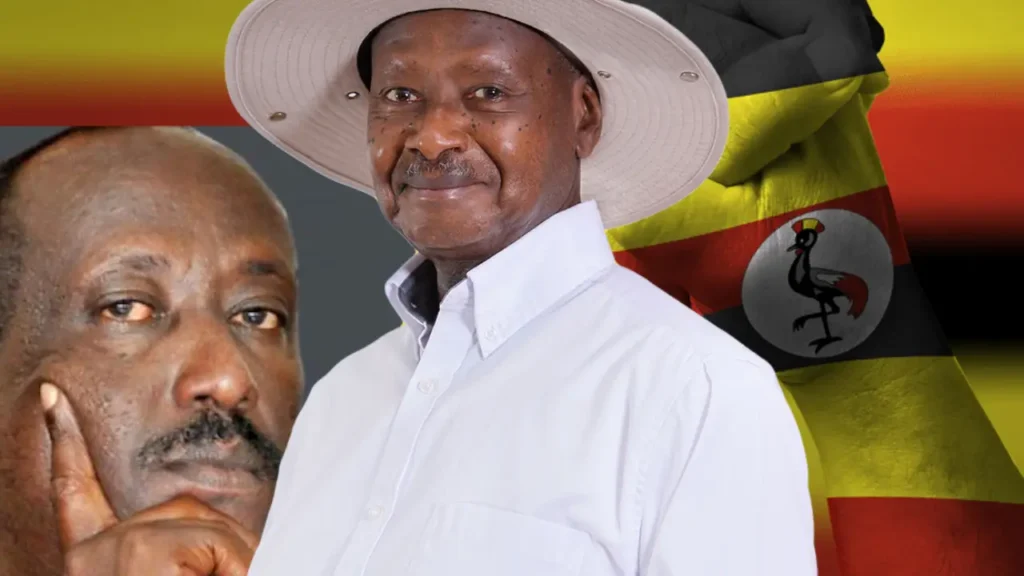
Uganda’s Political Dilemma : Is the Country ready for Constitutional Democracy?
By ; Ibrahim Kigozi G]
Uganda’s political landscape continues to raise important questions about democracy, leadership, accountability and the protection of constitutional rights. More than three decades after the introduction of multiparty political reforms and over 30 years since the promulgation of the 1995 Constitution, the country continues to grapple with questions about the effectiveness of its democratic institutions and the practical meaning of constitutional governance.
At the centre of this debate is a fundamental question: Is Uganda suffering from a weak Constitution, poor implementation of existing laws, or a political culture that struggles to embrace constitutional democracy?
Uganda has several institutions established to safeguard democratic governance, including Parliament, the Judiciary, the Electoral Commission and other accountability bodies. However, the existence of these institutions does not automatically guarantee effective constitutionalism. Their independence, credibility and ability to perform their duties without undue interference remain central to the country’s democratic debate.
One of the major challenges facing Uganda’s politics is the concentration and personalisation of political power. Political discussions frequently revolve around individual leaders and political parties rather than institutional accountability, policy alternatives and national development. This raises concerns about whether public institutions are sufficiently independent to serve citizens beyond political interests.
Electoral competition is another area attracting attention. Although Uganda conducts regular elections, questions surrounding political participation, campaign conditions, electoral transparency and public confidence continue to shape national conversations. A functioning democracy requires more than periodic voting; it requires an environment where political actors can compete freely and citizens can express their choices without intimidation.
The relationship between security institutions and civilian political processes also remains a subject of public debate. Constitutional democracy requires security agencies to operate within clearly defined legal mandates while protecting citizens’ freedoms, including peaceful assembly, association and expression.
Corruption, limited accountability and concerns about public resource management further complicate Uganda’s democratic journey. When citizens feel that public institutions are not sufficiently responsive, confidence in government and the political system can weaken.
However, the responsibility for strengthening democracy does not rest exclusively with the government. Opposition parties, civil society organisations, the media and citizens also have important roles. Political parties must embrace internal democracy, leaders must respect electoral competition, and citizens must demand accountability while rejecting political violence and intolerance.
The question of whether Uganda is ready for constitutional democracy therefore requires a broader examination of both political leadership and society. Constitutional democracy is not simply about having a written Constitution. It is about ensuring that everyone, including the President, ministers, legislators, security agencies and ordinary citizens, operates within the law.
Uganda may not necessarily need to begin its constitutional journey again. Rather, the country faces the challenge of ensuring that existing constitutional principles are respected, implemented and protected.
Ultimately, the strength of Uganda’s democracy will not only be measured by who wins elections, but by how institutions function, how citizens’ rights are protected and how peacefully political power can be exercised and transferred.
The bigger question remains: Does Uganda have a leadership problem, an institutional problem, or a political culture problem?