By; Ibrahim Kigozi G|

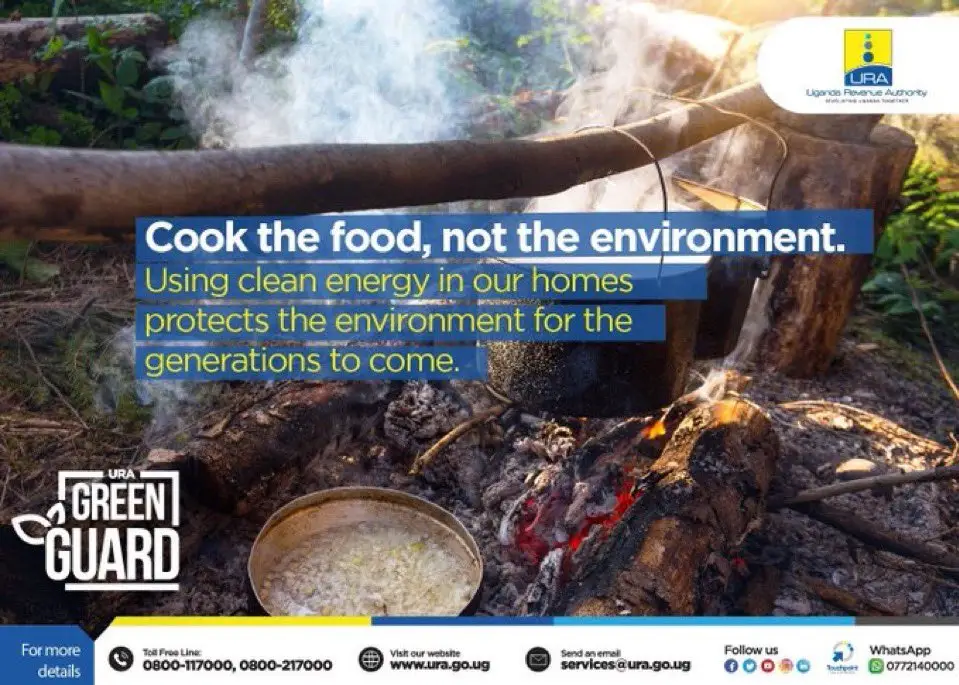
As Uganda confronts growing environmental challenges, the call for cleaner energy and responsible environmental practices is becoming increasingly important. From urban pollution and poor waste disposal to deforestation and climate change, the choices made by individuals, businesses and institutions today will shape the environment inherited by future generations.
It is against this background that the Uganda Revenue Authority (URA), through its Green Guard Campaign, has continued to promote environmental awareness and responsible practices among staff, taxpayers and communities.
The Green Guard initiative is designed to encourage people to understand the impact of environmentally harmful activities and adopt practices that protect nature. URA has identified challenges including excessive use of plastic bags, poor waste disposal, paper wastage, deforestation and air pollution as some of the environmental threats requiring greater public attention.
Clean energy is an important part of this conversation.
Unlike energy sources that depend heavily on burning fossil fuels, renewable energy options such as solar, wind and hydropower can help reduce pollution and greenhouse-gas emissions. For a country like Uganda, which has significant solar potential and already relies heavily on hydropower, expanding responsible use of clean energy can contribute to a more sustainable economy.
The transition to cleaner energy is not only an environmental issue. It is also connected to public health, agriculture, business and household livelihoods. Cleaner air can contribute to healthier communities, while reliable and affordable energy can support businesses, schools, health facilities and homes.
URA's Green Guard campaign has also demonstrated that environmental conservation can be taken beyond offices and into communities. In 2024, URA partnered with the Pamoja Peace and Love Foundation and other partners to clean Nakawa Market, collecting large amounts of waste and engaging market users on responsible environmental practices.
The campaign has also promoted tree planting. In 2023, URA reported distributing 1,800 tree seedlings to taxpayers through its partnership with Fair Ventures Uganda, linking environmental protection with its engagement with the taxpaying community.
These activities underline a broader message: protecting the environment requires participation from everyone.
For households, this can mean reducing unnecessary energy consumption, using energy-efficient appliances, considering solar solutions where practical, reducing plastic waste and planting trees. For businesses, it can involve improving waste management, reducing paper consumption, adopting cleaner technologies and incorporating environmental responsibility into everyday operations.
The responsibility also extends to institutions and policymakers, who can support investment in renewable energy, environmental education and sustainable infrastructure.
URA's Green Guard message therefore goes beyond planting trees or cleaning public spaces. It represents an effort to encourage a change in behaviour — from seeing environmental protection as somebody else's responsibility to recognising it as a shared national duty.
Uganda's economic development and environmental sustainability do not have to be competing goals. With responsible energy choices, better waste management, tree planting and greater public awareness, economic activity can take place while protecting the natural resources on which communities depend.
The message is simple but powerful: clean energy saves the environment, and protecting the environment protects Uganda's future.
Through initiatives such as the URA Green Guard campaign, the conversation is moving from awareness to action — reminding every Ugandan that a greener future begins with the choices made today.